
MATH SKILLS TEST
| Pre-school level | |
| Find blocks with the same digits as appear in the name of the tool “SMART BLOCKS 1, 2, 3, 4, 5” | 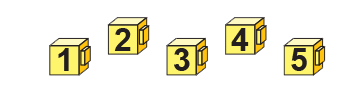 |
| How many blocks are with digits “1” and “4”? | 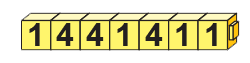 |
| 1st Grade Level | |
| Take blocks “1” and “2”, combine them together, add the symbol “+” to them, and then add digits “1” and “0”. What is the answer to this equation? | 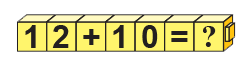 |
| 3rd Grade Level | |
| Take the block with “X”, combine it with “x” and add “L” to them. What is the number? | 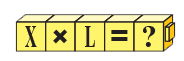 |
The cubes display mathematical symbols which children learn from age 4 to 10. The tool is designed to develop children’s math skills and help them to comprehend basic math concepts through playing learning games.
The chosen size, construction and design of the bricks take in account the natural sensitivity (sensory adaptation) and a motility of child’s fingers. The game helps to master reading quicker and promotes a right pronunciation of sounds.
Through learning games, a child will learn how to count, compare numbers and sizes, make numbers out of two digits and many others.
MATH GAMES
| 1 | Count using ordinal numbers (first, second, etc.) |  |
| 2 | Learn how to compare numbers, digits, and number of items from 1 to 100 | 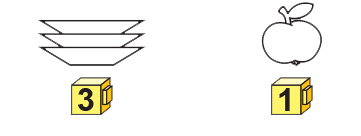 |
| 3 | . Get familiar with such concepts as “more”, “less”, “equal number” | 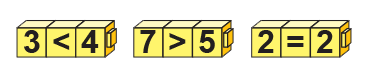 |
| 4 | Learn how to make a number out of two digits |  |
| 5 | Become familiar with Roman numerals |  |
| 6 | Learn basic math symbols +, -, ×, / , =, <, >, ≤, ≥. Practice writing them and using them in solving math problems |
 |
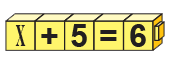
| 7 | Practice reading correctly the expressions, equations, and inequalities that you have written down “Let’s read: x plus 5 equals six |
 |
| 8 | Create math problems and solve them referring to real objects | 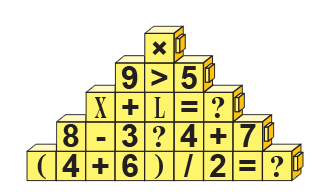 |
Mathematical symbols printed on the bricks are for learning by children at the age from 3 to 9.
The learning tool forms Counting skills and simple mathematical actions, and also it develops understanding of length, quantity, area and volume of subjects.
The learning tool is effective, compact and easy–to–use.
The learning tool is recommended by the Ministry of Education and Science of Ukraine, Advisory council of the basic education of the Russian Ministry of Education, the Ministry of Education and Science of Belarus, the Belarus Academy of education and National institute of education of Belarus, Ministry of Education of Uzbekistan, the Ministries of Education and the leading pedagogical centers of China and India.